
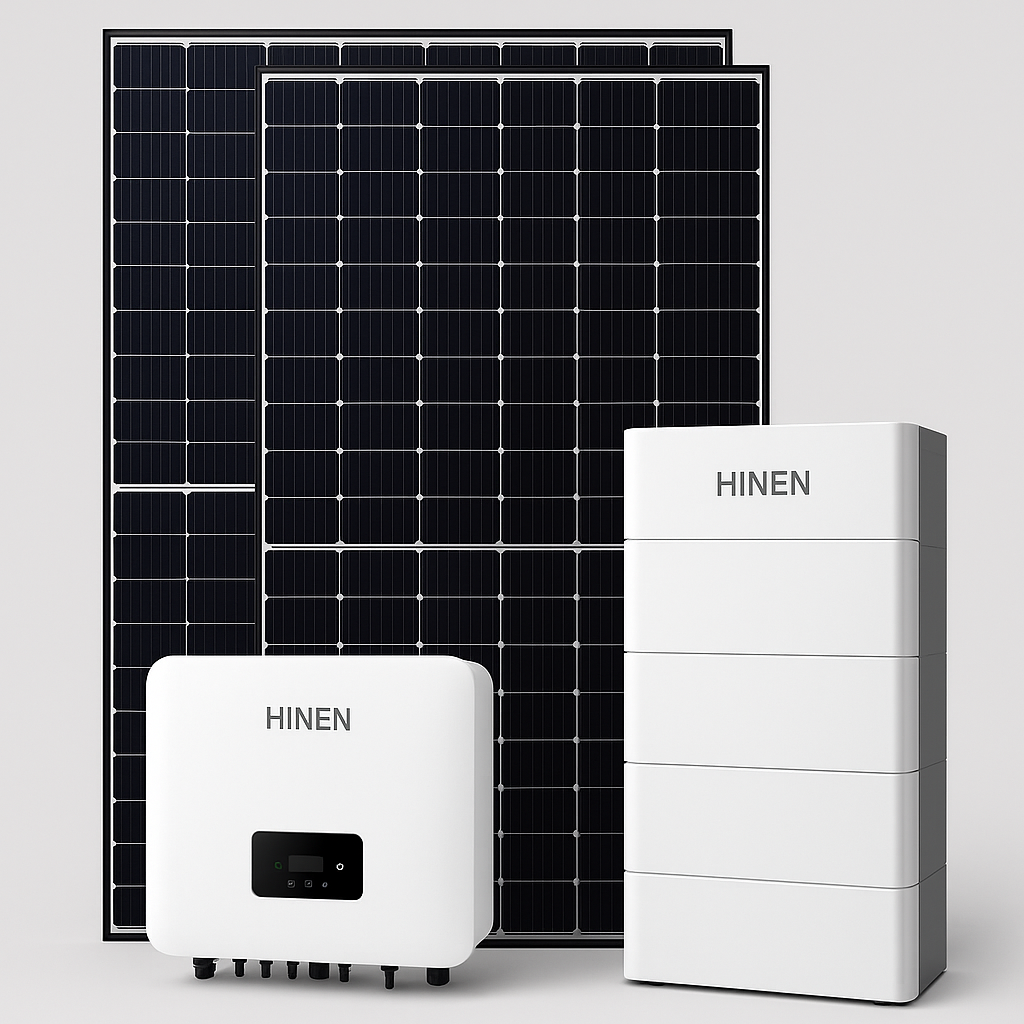
Choosing a PV system no longer means simply comparing a few panels and picking the lowest price. In 2026, the difference between a system that actually reduces your bill and one that only looks good in a quote lies in how well the home's real consumption, the inverter type, the available roof space and, sometimes, the integration of a battery fit together.
The good news is that you don't have to start from scratch. If you understand a few simple criteria, you can quickly filter quotes and arrive at a configuration that makes sense for your home, not for a generic house in a brochure.
1. Start with real consumption, not panel power
The first step is to look at the annual consumption on your bills and at your household habits. A PV system should be sized according to how much you consume, when you consume it and whether you are planning changes such as a heat pump, additional air conditioning or an electric car.
- If your consumption is higher during the day, you can make better use of the panels' direct output.
- If much of your consumption is in the evening, a battery or a hybrid system may become more attractive.
- If you want to expand in the future, it is worth choosing an inverter from the outset that leaves room for growth.
As a simple rule, don't choose a system based on what "sells most often", but on your home's profile.
2. Set your goal: lower bills, autonomy or backup
Two homes with the same consumption may need different solutions. That is why, before choosing components, it is a good idea to clarify what you want from the system:
- Lower bills: focus on yield and correct sizing.
- Battery-ready: a hybrid inverter and good compatibility with storage.
- Greater independence: a complete package with a battery, designed for evening consumption and backup.
If you are still comparing options, it is also worth looking at the premium sets with panels, inverter and storage, as they show you combinations that have already been put together coherently.

3. How to choose the right power in kW
Correct sizing is key. A system that is too small will not cover enough of your consumption, while one that is too large may not justify the investment, given the way you use energy.
In practice, for a typical home, you need to take into account:
- annual consumption and seasonality;
- the available roof area;
- orientation and shading;
- whether the installation is single-phase or three-phase;
- your consumption plans for the next 3–5 years.
If your roof space is limited, high panel efficiency becomes much more important than in a situation where space is generous.
4. Which panels are worth considering in 2026
For many customers, choosing panels comes down to power and price. In reality, efficiency, behaviour at high temperatures and the ratio of area to output matter a great deal.
If you want a premium solution that makes good use of the available space, it is worth looking at the AIKO panel collection. Especially for residential and small commercial projects, high-efficiency panels can help when you want more output from the same area.
- For compact residential roofs, a good example is the AIKO 465 W panel.
- For projects where you want high power per module, you can also consider the AIKO 600 W version.

5. The inverter: the component that ties the whole system together
The inverter should be chosen according to the home's electrical installation, the system's power and how important battery compatibility is to you.
Broadly speaking:
- Single-phase: suitable for many residential homes.
- Three-phase: useful when you have a three-phase installation or larger loads.
- Hybrid: the most flexible choice if you want the option of storage, now or later.
For homes where you want a modern, flexible solution, the inverters in the Nectaria range are also worth considering. Useful reference points for the residential segment:
- The Hinen 5 kW single-phase hybrid inverter is a suitable choice for medium-sized single-phase systems.
- The Hinen 6 kW single-phase hybrid inverter offers extra headroom for families with higher consumption or expansion plans.

6. When a battery makes sense
Not every home needs a battery from day one. But there are a few situations in which storage becomes very attractive:
- your main consumption is in the evening;
- you want to increase self-consumption;
- you want a system that is better prepared for energy independence;
- you want an integrated package, not a makeshift add-on later.
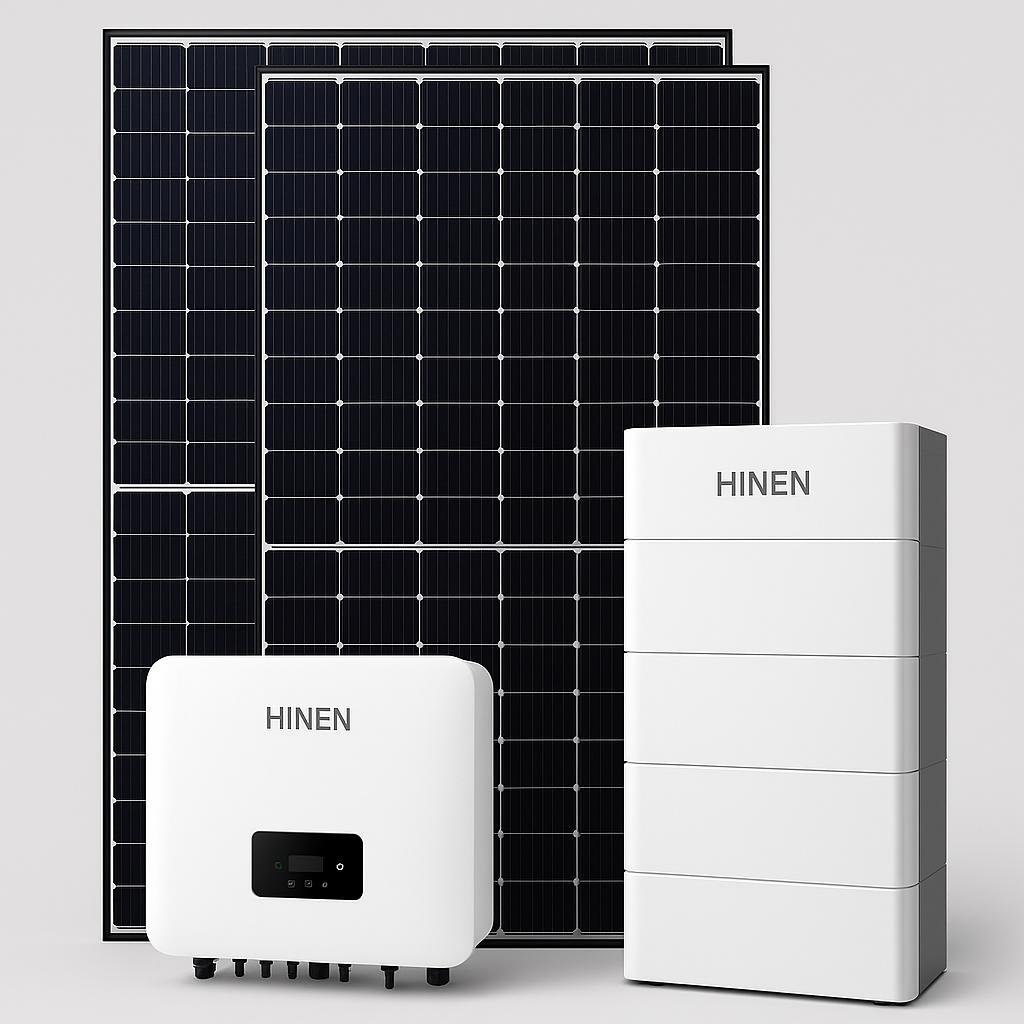
If you are at the stage of comparing options, look at both the battery collection and the complete packages that already include storage. For example, the Hinen 8.9 kWh battery module is relevant if you are looking for a premium solution, and for those who want something already integrated, the 6.51 kW single-phase premium set with AIKO, Hinen and a 10 kWh battery is a good starting point.
7. The simple solution for those who want fewer headaches
Many homeowners lose time comparing panels, inverter, battery, smart meter and compatibility separately. If you want a simpler process, it is worth starting from a complete set and adjusting only where you really need to.
In the Nectaria range, the premium sets have the advantage of already following a coherent technical logic. This means fewer question marks about compatibility and a clearer picture of the final investment.
- For a single-phase home, you can start with the 6.51 kW premium set.
- For a three-phase configuration, the 8.37 kW three-phase premium set is also worth a look.
8. Common mistakes worth avoiding
- Choosing solely on price, without checking what you actually get in the package.
- Undersizing the inverter or choosing one with no flexibility for the future.
- Ignoring roof space and panel efficiency.
- Buying a battery too early or, conversely, choosing a system that does not let you add one easily later.
- Comparing quotes that look similar but include components from very different classes.
Conclusion
The right system for your home in 2026 is one that starts from real consumption, uses compatible components and leaves room for future needs. If you need high efficiency on the roof, premium panels such as AIKO are worth considering. If you want flexibility and storage readiness, it is worth looking at a hybrid inverter and, where it makes sense, a battery. And if you prefer a simpler, more coherent solution, you can start directly with the Nectaria premium PV sets.
If you like, you can start your comparison with these reference points:

Leave a comment
This site is protected by hCaptcha and the hCaptcha Privacy Policy and Terms of Service apply.