
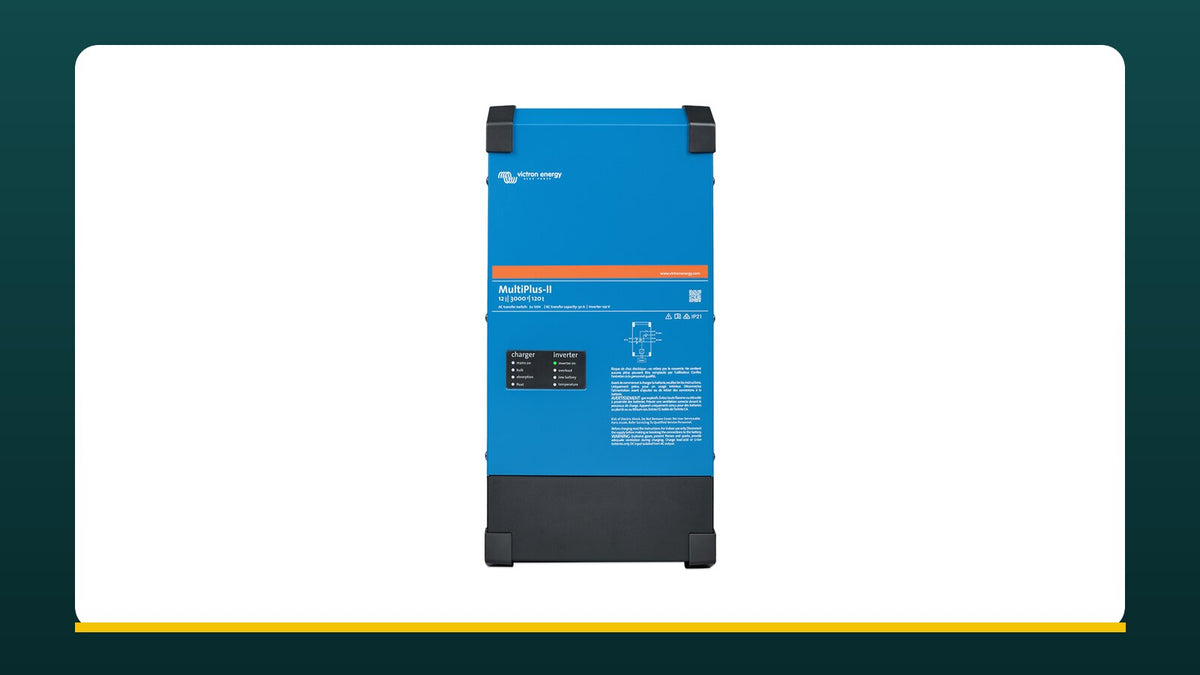
Victron: flexible storage for projects with a generous budget
Victron is one of the solutions we recommend when you want an advanced battery system, have a generous budget or want to keep an existing on-grid Fronius inverter. With a well-chosen architecture, we can add storage without automatically starting from replacing the PV inverter.
At Nectaria Solar, the conversation about Victron starts with what you already have and what you want to achieve: using energy from the battery, backup power or off-grid operation. These goals lead to different configurations. The advantage is being able to build the system around your needs, using the right equipment and integration.
How we add a battery alongside an on-grid Fronius
In an AC-coupled system, the Fronius PV inverter remains responsible for production from the panels. We add a Victron inverter/charger, the battery and a GX device for integration and monitoring. This architecture is described in the official Victron ESS design manual.
The MultiPlus and Quattro families are used in these architectures. The MultiPlus-II is one example of a Victron inverter/charger. The unit and the battery are chosen together, based on the power required by the installation and the desired operating mode.
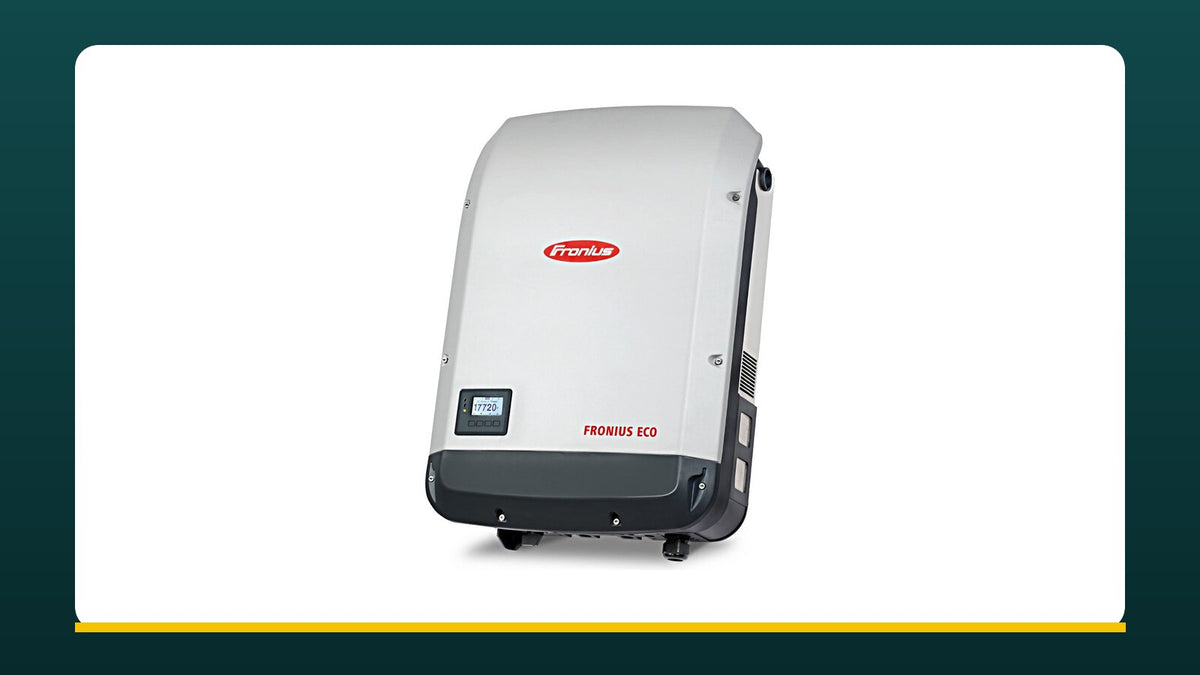
This way, a Fronius that does not allow a battery to be connected directly can remain part of the project, provided the model and configuration are compatible. The official guide lists the classic Fronius Primo, Symo and Eco families. In the Nectaria shop you can see the Fronius Eco 25.0-3-S and the 10 kW Fronius Symo as examples of on-grid inverters for which adding storage requires discussing the complete architecture.
Why Fronius and Victron work well together
Integration between the two brands is documented by Victron and includes communication over the local network. Fronius data can be displayed on the GX device and on the VRM platform. This link allows the system to be monitored as a whole, with the communication equipment appropriate to the model.
For communication, the documentation distinguishes between the Solar API for monitoring and SunSpec over Modbus TCP for control. Power limiting works via Modbus TCP. These shared protocols support the technical integration between Fronius and Victron; it is not enough to connect two devices to the same network and assume that all functions are already active. The details are published in the official Victron driver documentation.
During configuration we choose the functions the project needs. If you want export limiting, we follow the requirements in the ESS manual. Monitoring production and controlling power are different operations, and the system must be prepared for both when the goal requires it.
What happens when the grid goes down
To also use energy from the panels during an outage, the PV inverter must be integrated into the microgrid powered by Victron. Its position in the installation matters: connecting it to the AC-out output can enable this operation, with the right sizing and settings. Simply adding a battery next to a grid-connected inverter does not amount to a complete backup solution.
In island mode, Victron can regulate PV production by shifting the frequency. The Fronius must be configured for this mode of operation, according to the official Fronius–Victron AC coupling guide. Through this coordination, the system adjusts production to what it can use and store.
For you, the practical questions remain clear: which circuits will work, what loads can start at the same time and how the system behaves when the battery approaches its discharge limit. We settle these before choosing the equipment, so that the backup matches the loads you want to keep powered.
Sizing makes the difference
Victron requires compliance with the Factor 1.0 rule for coupling on AC-out. In the current documentation, the calculation refers to the continuous power of the inverter/charger, expressed in watts at 25°C, not directly to the VA value in the product name. The battery must, in turn, be sized for this architecture.
The consequence for your choice is simple: we do not match devices solely by the figures on the label. We check the power ratings and limits of the whole system against the official Victron AC coupling guide. This step is essential when you keep an existing Fronius and add the battery later.
Victron for off-grid
Victron is also suitable for off-grid projects, where it forms the microgrid and manages the battery. The design differs from that of a grid-connected ESS. For a permanently off-grid installation, we use the dedicated architecture and configuration explained in the Victron documentation.
In off-grid projects or those with extended outages, the AC coupling guide also requires DC solar charging via an MPPT, so that the system can recover after the battery has been discharged. This detail must be planned from the start. It helps you get a system designed for the way the site is actually used.
When we recommend this solution
Victron is worth considering when you have a compatible Fronius you want to keep, when backup requirements are important or when the project involves off-grid operation. The budget must reflect the whole system: inverter/charger, battery, communication and integration. For a new system, we also compare suitable alternatives before defining the configuration.
Nectaria Solar works with Fronius and is a Fronius service partner. We carry out residential installations in Alba, Sibiu, Cluj, Hunedoara, Bistrița-Năsăud, Bihor and Mureș, and commercial projects of at least 50 kW across Romania.
To have an existing system or a Victron project assessed, call 0723 172 359 or fill in the Nectaria Solar configurator.


Leave a comment
This site is protected by hCaptcha and the hCaptcha Privacy Policy and Terms of Service apply.