
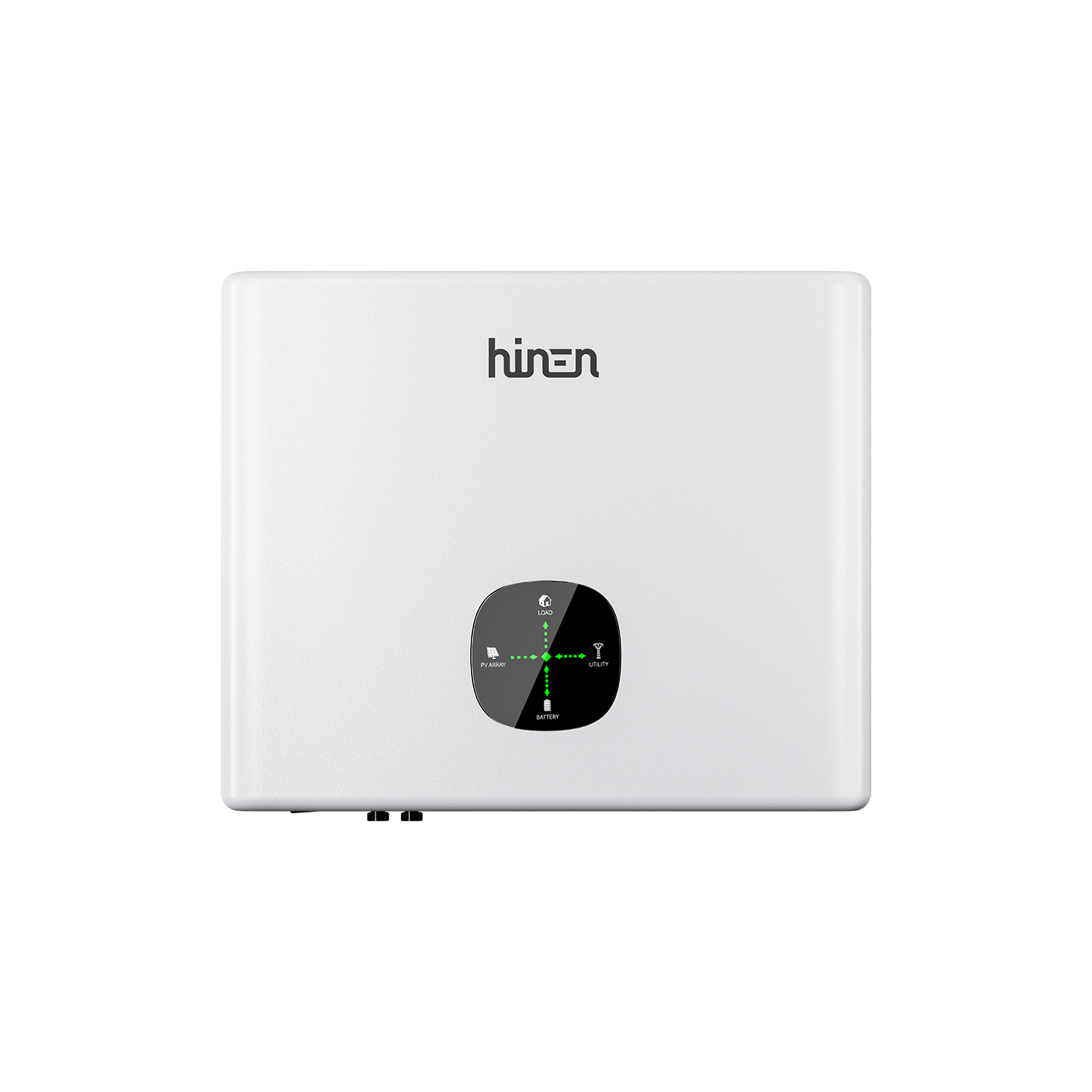
The inverter is one of the most important components in a PV system. It affects not only day-to-day operation, but also the system's long-term flexibility. Yet many buyers look only at the power rating in kW and skip the questions that really matter.
In 2026, choosing the right inverter means looking at the type of electrical installation, your consumption profile, whether you intend to add a battery and how scalable you want your system to be.
1. Single-phase or three-phase?
The first step is to start from the home's electrical installation. If the home is single-phase, you will usually opt for a single-phase inverter. If you have a three-phase installation or larger loads, a three-phase inverter may be the right choice.
It makes no sense to choose based only on "what seems more powerful". The inverter must be compatible with the actual installation and with the way consumption is distributed in the home.
2. Do you need a hybrid inverter?
If you want to keep the storage option open, the answer is usually yes. A hybrid inverter gives you more flexibility and is a good choice when you want to be able to add a battery without rebuilding the system later.
For residential homes, you can consider products such as:
- Hinen 5 kW single-phase hybrid
- Hinen 6 kW single-phase hybrid
- All-In-One Hinen 5 kW for a more compact solution

3. How to match the inverter to the panels
The inverter is not chosen separately from the rest of the system. It must be considered together with the number and type of panels, the available space and the final objective of the project.
If you are aiming for high yield from the roof, it is worth considering it alongside efficient panels, such as those in the AIKO range. A good example for compact residential projects is the AIKO 465 W panel, which can support a well-optimised configuration in a limited space.
If you need higher power per module, you can also consider the AIKO 600 W, especially in projects where the size and purpose of the installation justify it.
4. The most common mistakes
- Choosing the inverter on price alone and ignoring the quality of the system as a whole.
- Undersizing the inverter relative to future needs.
- Buying a model that won't help you if you want a battery later.
- Comparing two quotes on power alone, without looking at the real differences between the equipment.
In practice, a good choice is a balanced one, not the cheapest on the list.
5. When a complete set makes sense
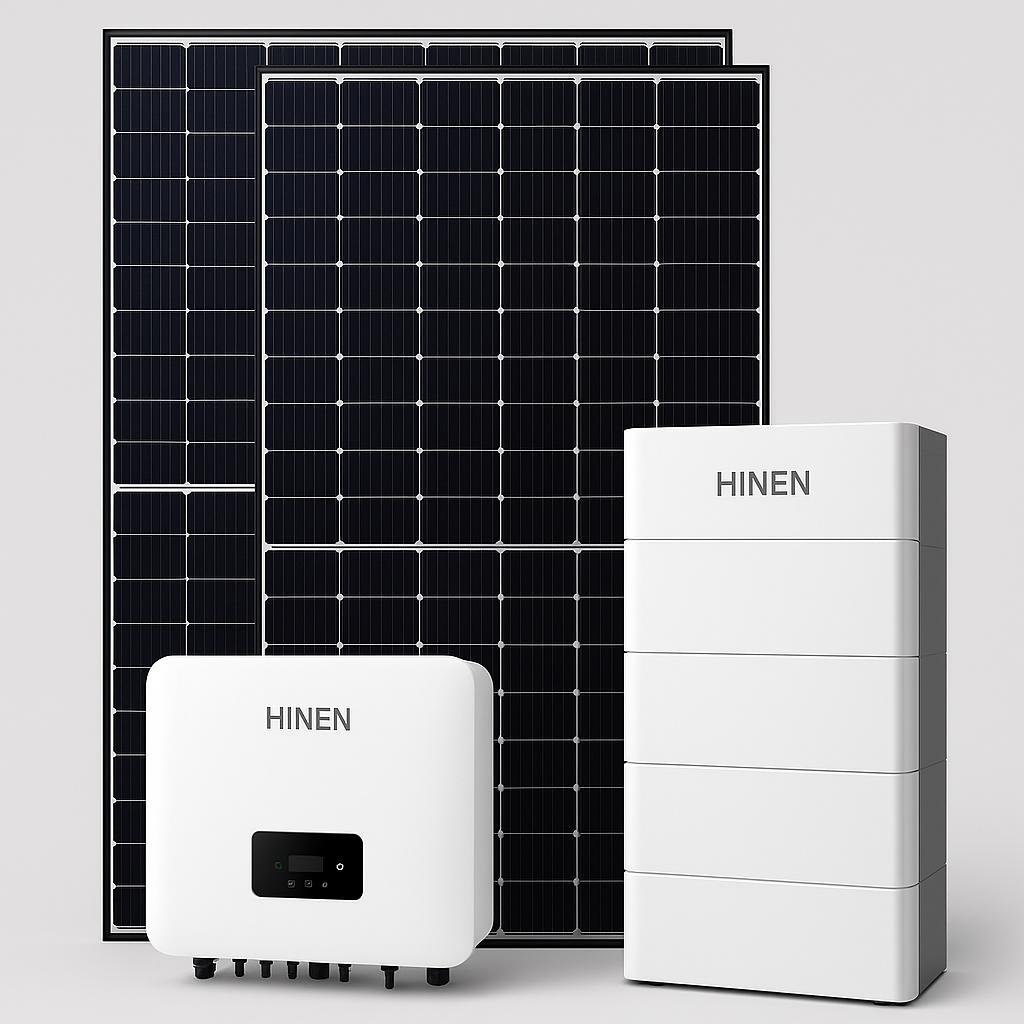
If you don't want to compare panels, inverter, battery and compatibility separately, a complete set can be the simplest route. The advantage is that you get a combination that has already been technically thought through.
In the Nectaria range, the premium sets are useful in exactly this scenario. For example:
- 6.51 kW single-phase premium set with AIKO, Hinen and a 5 kWh battery
- 6.51 kW single-phase premium set with a 10 kWh battery
These are good solutions if you want fewer headaches and a clearer picture of the final system.
6. What recommendation makes sense for most homes
For many residential homes, a well-chosen hybrid inverter is the most flexible choice. Even if you don't install the battery on day one, you keep the option open. If you have moderate consumption and a single-phase installation, a 5 kW or 6 kW model can often be a very good starting point, depending on the final sizing of the system.
Of course, the exact choice must be matched to the number of panels, your consumption and your plans for the coming years.
7. Why we work with Hinen on residential projects
We chose to work with Hinen for the residential market and have been installing their equipment for over a year now, including as distributors in Romania. In our experience, the difference lies not only in the datasheet, but also in the way the manufacturer has thought through the installation, configuration and operation of the system.
- Hinen inverters allow oversizing with nearly twice the inverter's power in panels, which gives much more flexibility in sizing.
- Hinen batteries come with 8,000 guaranteed cycles, above the average of approximately 6,000 cycles we frequently see on the market.
- We have support from the Hinen technical team on every installation, including for checking the installation and the settings.
- There are solutions both for grid-connected customers and for those who have no power supply at all.
If you want to see specific examples from their range, you can start with the Hinen 5 kW single-phase hybrid or the Hinen 6 kW single-phase hybrid. If you want a more compact solution, the single-phase All-In-One range covers 5, 6, 8, 10 and 15 kW, and the site already lists the All-In-One Hinen 5 kW, All-In-One Hinen 8 kW, All-In-One Hinen 10 kW and All-In-One Hinen 15 kW versions.
Single-phase All-In-One for roofs with different orientations
Hinen also offers a range of single-phase All-In-One inverters of 5, 6, 8, 10 and 15 kW. A very practical advantage is that these models come with 4 MPPTs, allowing up to 4 strings of panels mounted on different orientations to be configured.
For homes where the roof is split into several slopes or where exposure is not uniform, this gives more design freedom and helps make better use of the available area. In practice, you can better separate east, south and west sections or areas with different conditions, without the compromises you see with less flexible solutions.
Another important advantage is the modularity of the storage: Hinen All-In-One systems work with 8.9 kWh batteries or multiples of this capacity, which makes expansion clearer and more predictable over time. If you start simpler, you can then scale up with 8.9 kWh, 17.8 kWh or 26.7 kWh modules, depending on the project and consumption.
A very important advantage on three-phase systems
On Hinen three-phase inverters, each phase can be set independently. This matters a lot in practice, because it avoids the frustrating situation where you are exporting energy on two phases while still drawing from the grid on the third, something that happens with many other solutions.
On the three-phase All-In-One side, the range goes up to 30 kW, which opens the discussion not only for homes with high consumption, but also for small commercial applications or projects where you want more power headroom. Here too, the storage logic remains the same: 8.9 kWh batteries or multiples of this value, so the system can be expanded in stages, without improvisation.
Bypass designed in at the factory, not improvised on site
Hinen also has a dedicated Intelligent Box for single-phase systems and a separate one for three-phase systems. Its role is very clear: if a problem occurs in the PV installation, the bypass is made quickly and the customer switches to grid power, without being left without electricity.
This shows an important difference in philosophy. On the market, many installers don't have a dedicated module and end up with improvised setups generically called "automation", often based on ATSs (automatic transfer switches) that can fail relatively quickly. The result can be exactly the situation the customer wants to avoid: the house is left without power. The fact that Hinen has provided for this situation at the factory is, for us, a very strong practical argument.
Conclusion
The right inverter is the one that matches your home's electrical installation, the system's power and your plans for a battery or expansion. If you want flexibility, it is worth starting with a hybrid inverter from the Nectaria range. If you want to simplify the choice, you can start directly with the premium sets, where the panels, inverter and storage have already been designed to work well together.


Leave a comment
This site is protected by hCaptcha and the hCaptcha Privacy Policy and Terms of Service apply.