

Many companies operate in Romania's PV market, and many of them take the cheapest route: no-name panels, thin cable, unbranded connectors, mounting structures that have to be replaced after a few years. On installation day, all systems look the same. The difference shows up in your bills over the next 20–30 years: how much the system produces in summer during a heatwave, how much it produces in winter, how safely it operates and how long it lasts.
Customers come to us precisely because they want quality. That is why we show you, point by point, what we install and why every detail matters.
Every home has its own story
No two homes are identical. The roof, the orientation, shade from trees or from the house next door, the electrical panel, the approved grid capacity: all of these change from one address to the next. The people who live in them are just as different.
- Some do their washing and ironing during the day, others in the evening, after they get home from work.
- Some are at home all day, with the heat pump or air conditioning running. Others leave in the morning and come back in the evening.
- Some have an electric water heater, a swimming pool or an electric car. Others have just the fridge and a few appliances.
That is why we don't install "one standard system for everyone". We look at consumption, household habits and the roof, then choose the panel power, the inverter and, if it makes sense, the battery. For those who use a lot of energy in the evening, the battery shifts the energy produced at midday to the hours when they are at home. For those who use a lot during the day, what matters more is that the panels perform well in the hot hours.
Our customers quickly learn to get more out of their system
We have seen this in hundreds of homes: after installation, most customers teach themselves. They check in the app how much the system is producing and, within a few weeks, shift their big loads to midday on their own: the washing machine, the dishwasher, the water heater, charging the electric car. Without us asking them to.
The result shows on the bill. Energy used directly in the home is worth more than energy fed into the grid, so every load shifted into the sunny hours means money saved. At commissioning, we connect the system to the app and show you how to track production, so you can do this from day one.
Temperature coefficient: the figure few people explain
The power rating on a panel (for example 650 W) is measured in the laboratory at a cell temperature of 25 °C. On the roof, in the sun, the cell is almost always hotter: usually 20–30 °C above the air temperature. On a 35 °C summer day, the cell easily reaches 60–65 °C.
For every degree above 25 °C, the panel loses a small percentage of its power. This percentage is called the temperature coefficient and is stated in the datasheet of every panel.
- The panels we install, AIKO 650 W and LONGi 480 W, have a coefficient of −0.26% per degree.
- Many standard panels on the market are around −0.30…−0.35% per degree.
A concrete example, for a cell at 65 °C (40 degrees above the laboratory temperature):
| Panel | Coefficient | Loss at 65 °C |
|---|---|---|
| AIKO / LONGi, installed by Nectaria | −0.26%/°C | approx. 10.4% |
| Standard panel | −0.35%/°C | approx. 14% |
On a 10 kW system, that means approximately 360 W more right at midday, when the sun is strongest and production matters most.
And in winter? Cold helps all panels: a cold cell even produces above its rated power. But in winter, spring and autumn too, during sunny hours the cell heats up to 20–30 degrees above the air temperature. That is why a low coefficient brings extra production in most of the productive hours of the year, not just in the summer months. In winter, one more thing matters: how well the panel performs in low light.
They produce in daylight, not just in direct sun
A solar panel does not necessarily need strong sun. It also produces in diffuse light: early in the morning, in the evening, under overcast skies, in winter when the sun is low. Of course, production is lower than on a clear day, but it is not zero.
The AIKO and LONGi panels we use have cells with the contacts on the back, with no metal ribbons on the front. The entire front surface captures light, and the panel copes better with low light and partial shading than many standard panels. In practice, the system starts producing earlier in the morning and stops later in the evening.
AIKO and LONGi: the global leaders in panel efficiency
In the monthly TaiyangNews TOP SOLAR MODULES ranking, the international benchmark for the efficiency of mass-produced panels, AIKO held 1st place alone from 2023 until April 2026, i.e. almost three years in a row. Since April 2026, AIKO has shared 1st place with LONGi, both at 25% efficiency for their top-of-the-range models.
We work with exactly these two brands:
- AIKO 650 W, 24% efficiency;
- LONGi 480 W, 23.5% efficiency, a more compact panel, suitable for roofs with limited space.
High efficiency means more energy from the same roof. And with AIKO, the performance warranty is 30 years.
The details that make the difference
The difference between a quality system and a cheap one is not just in the panels. It lies in dozens of small things the customer doesn't see when signing:
- 6 mm² solar cable, not the 4 mm² that is usually used. Lower losses along the cable run, and cable that heats up less.
- Genuine Stäubli MC4 connectors, from Germany. In terms of price they are almost negligible in the overall project, but they are very important for safety. A poor connector can overheat and cause faults or even a fire.
- Directly imported mounting structure, which we have been using for over 4 years. If the roof requires a special structure, we order it specifically for that roof. We don't improvise.
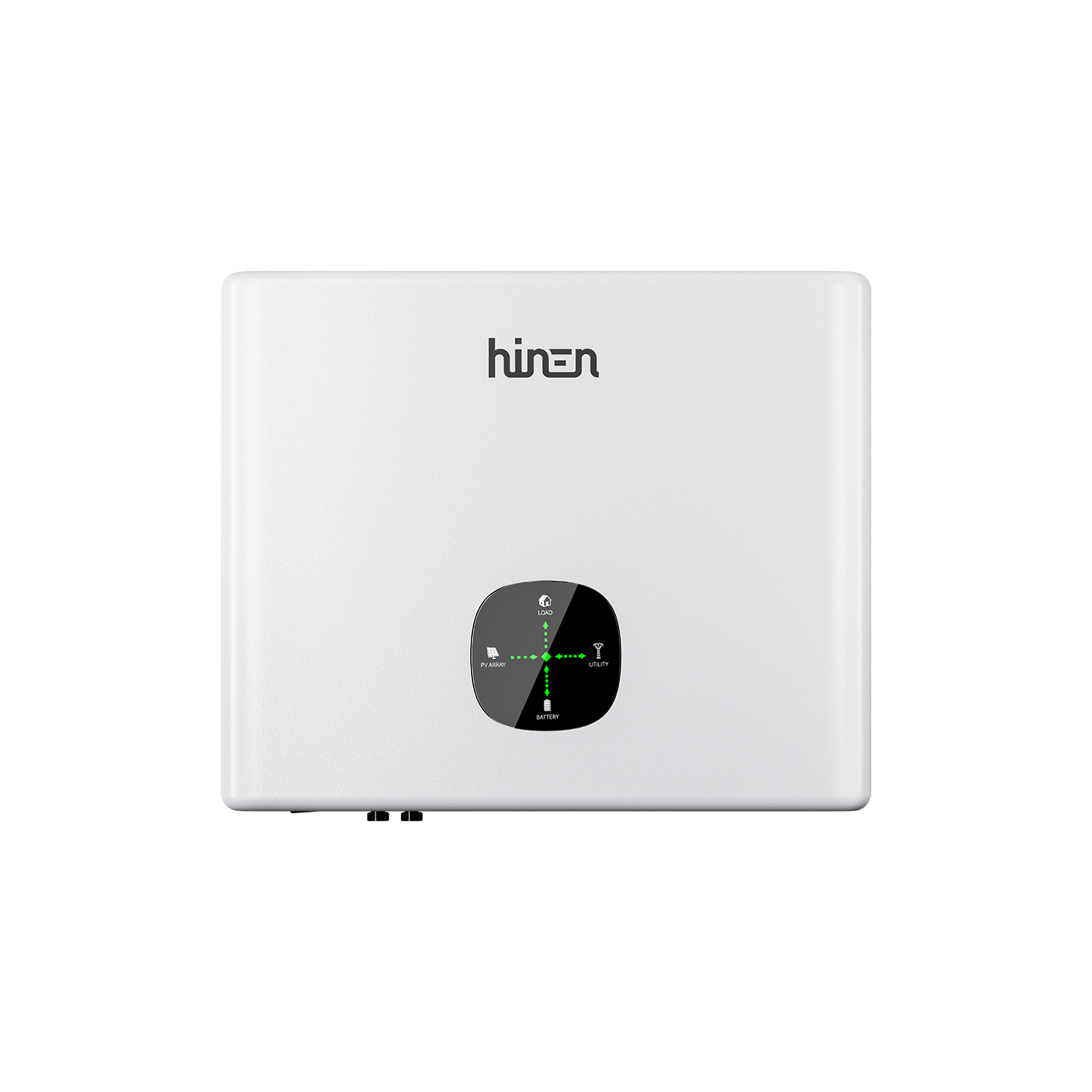
- Hinen Premium inverter, with a 10-year warranty (with the system connected to the Hinen app). We are official Hinen distributors and import it directly.
- Hinen batteries: 10-year warranty and 8,000 cycles, compared with the 6,000 cycles of many batteries on the market.
- Hinen Smart Box on battery systems: when grid power goes out, the house switches automatically to the battery and essential loads stay powered.
- Only our engineers do the electrical work. Qualified staff, ANRE-certified company, with over 15 years of experience.
What you get with Nectaria compared with a "low-cost" offer
| Low-cost offer | Nectaria | |
|---|---|---|
| Panels | generic brand, coefficient −0.30…−0.35%/°C | AIKO / LONGi, −0.26%/°C, 23.5–24% efficiency |
| Solar cable | 4 mm² | 6 mm² |
| Connectors | unbranded | Genuine Stäubli, Germany |
| Batteries | 6,000 cycles | 8,000 cycles, 10-year warranty |
| Mounting structure | may need replacing after a few years | directly imported, chosen for your roof |
| Electrical work | not always qualified staff | engineers only |
Everything in stock. We install right away.
We are direct importers, so the equipment comes from the manufacturers with no intermediaries. The goods are in stock in our warehouse, so we can deliver and install right away. A 3–12 kW residential system is installed in a single day, and installation is followed by testing and commissioning.
See our pre-configured systems with installation included: PV systems without batteries and PV systems with batteries. Or call us on 0723 172 359 and we will tell you which system suits your home.


Leave a comment
This site is protected by hCaptcha and the hCaptcha Privacy Policy and Terms of Service apply.