
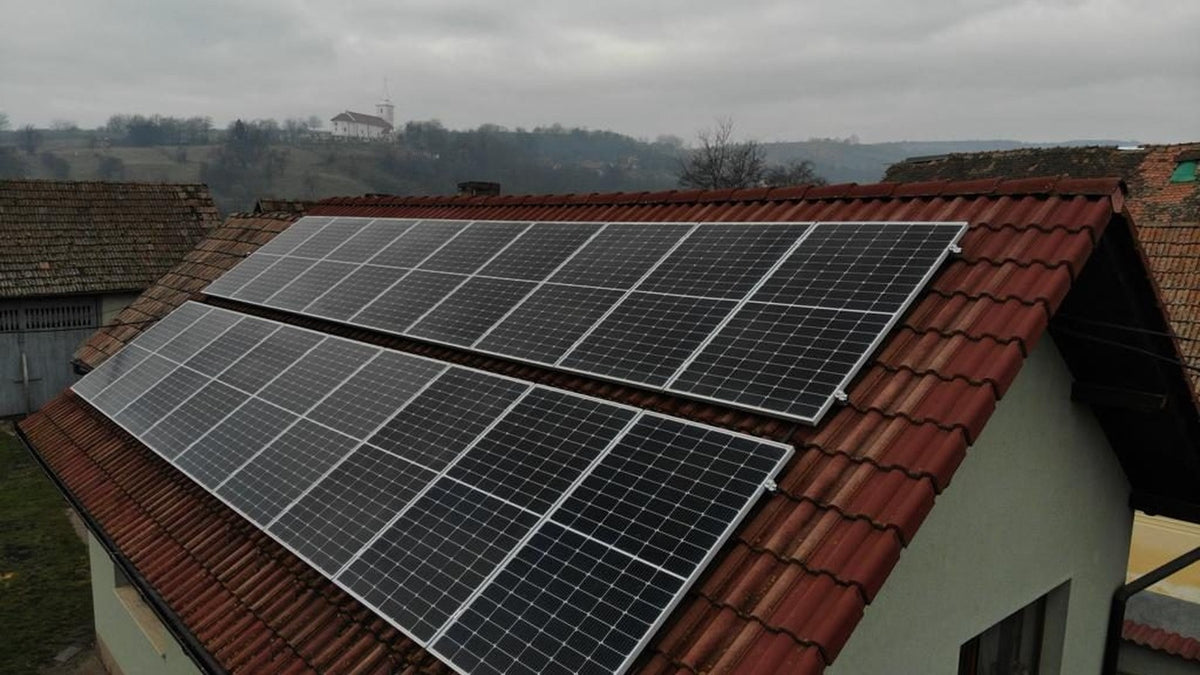
A solar PV system without a battery can be a very good choice for a home that uses energy during the day. The panels produce, and the appliances running at those hours use the available energy. If most of your consumption happens in the evening, it is worth discussing storage as well.
At Nectaria Solar, we choose the configuration based on the household's schedule, consumption, grid connection and roof. A battery is justified by the way you will use the stored energy. That is why we start with questions about your home and compare the system without storage with the complete alternative before the final choice.
When you use energy matters as much as the total
The bill shows how much energy you consume over a period. To choose a battery, we also need to know when the major loads switch on. Are you at home during the day? Can the water heater, heat pump or household appliances run during production hours? Is the electric car available for charging at that time?
Energy produced and used at the same time in the home is called direct self-consumption. A system without a battery relies on this overlap. When the available production is lower than the home's consumption, the difference comes from the grid. In the evening, without storage, the energy you need is drawn from the grid.
Surplus energy can be exported to the grid once the steps for connecting as a prosumer have been completed. However, choosing the system starts with the energy you can use in the home. For sizing, we look separately at total consumption and at the loads you can shift into sunny hours.
When it makes sense to start without a battery
The option without storage is worth considering when you have substantial daytime consumption and want to invest in production first. For example, a home that is occupied during the day can use the energy for everyday activities, air conditioning or water heating, depending on the existing equipment.
What matters is a routine you can follow naturally. If your appliances can be programmed, some activities can be moved into productive hours. At commissioning, we show you the production in the app, so you can see how it overlaps with how you use your home. Choose the habits that are comfortable for you and track the results over time.
| Household situation | What we look at at Nectaria |
|---|---|
| Significant daytime consumption | A system without a battery, sized for actual consumption |
| Consumption concentrated in the evening | Storing surplus energy for later use |
| Habits not yet clear | A hybrid configuration and assessment of consumption after installation |
| Essential loads during outages | Battery, Smart Box and backup circuits prepared together |
No battery now, with the option of storage later
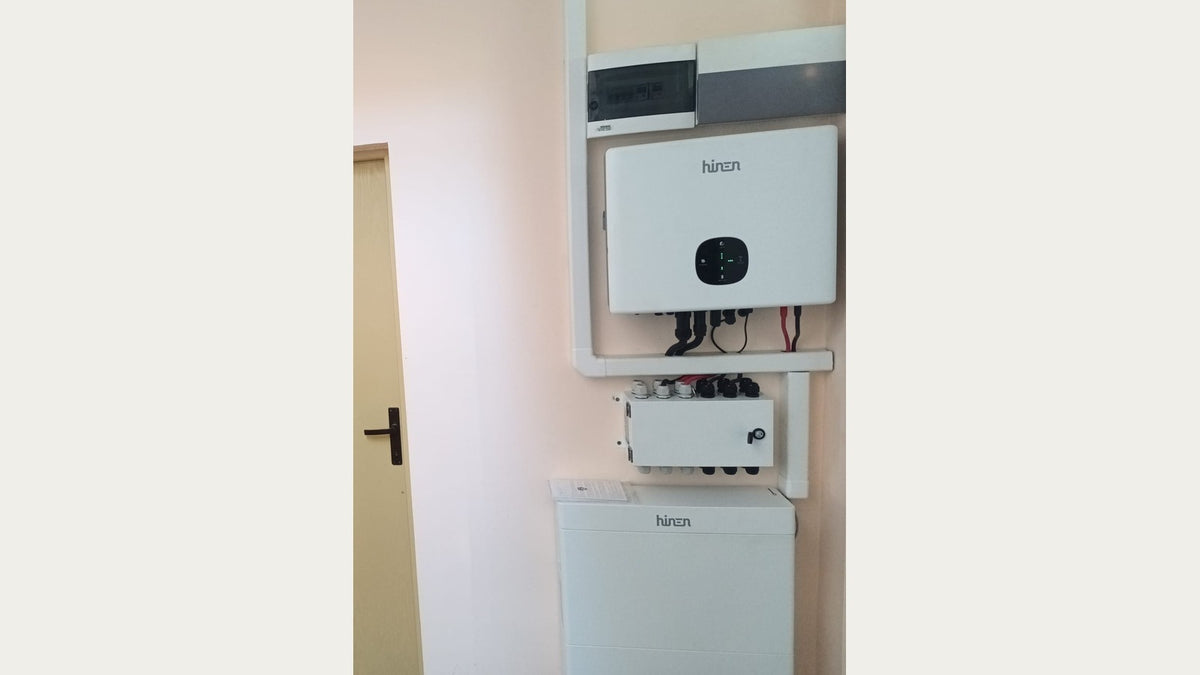
The Premium Hinen inverters used in these packages are hybrid. You can check this feature on the pages for the 6 kW single-phase model and the 10 kW three-phase model. The architecture allows a compatible battery to be added later.
This is an advantage if you want to start with the panels and decide on the storage capacity after seeing how the system performs in your home. From the start, we keep the battery location, the routes and the expansion goal in the discussion. This way, today's choice also prepares the next step.
Compatibility is checked for the chosen model
When expanding, we match the battery family to the inverter: voltage, communication and configuration must correspond. Single-phase and three-phase models are assessed separately. Before ordering, we check the exact combination and determine the required components, including the backup equipment if you also want this function.
The Premium Hinen inverter warranty is 10 years with the system connected to the Hinen app. At commissioning, we make the connection and show you how to monitor production. Nectaria is an official Hinen distributor and imports the brand's equipment directly, which allows us to discuss the solution as a whole.
When a battery is worth having from the start
Storage becomes relevant when you have surplus energy during production hours and consumption you want to cover later. A family that is out during the day and home in the evening may have a profile suited to this approach. We choose the capacity based on the energy to be stored and the loads that will use it.
A battery needs available energy to charge. That is why we look at panel power, household habits and storage together. A larger battery must be supported by this data. For comparison, you can see the solar PV systems with batteries, and then we discuss the option that suits your site.
The Hinen batteries in our solutions have a 10-year warranty and 8,000 rated cycles. Cycles should be read together with the conditions in the datasheet, and the warranty in the product document. Capacity, compatibility and actual use matter in the choice, alongside these benchmarks.
Do you also want power when the grid goes down?
Backup power is prepared as a separate part of the project. On systems with a battery, the Hinen Smart Box switches over when the grid goes down, and the essential loads stay powered from the available energy. We determine in advance which circuits need to be kept on and how their consumption relates to the inverter and the battery.
For you, the practical question is what you want to keep working during an outage: lighting, the fridge or other essential loads. We start from this list and prepare the installation accordingly. How long the power lasts depends on the energy remaining in the battery and on the consumption of the circuits in use.
Panels and installation remain essential in both options
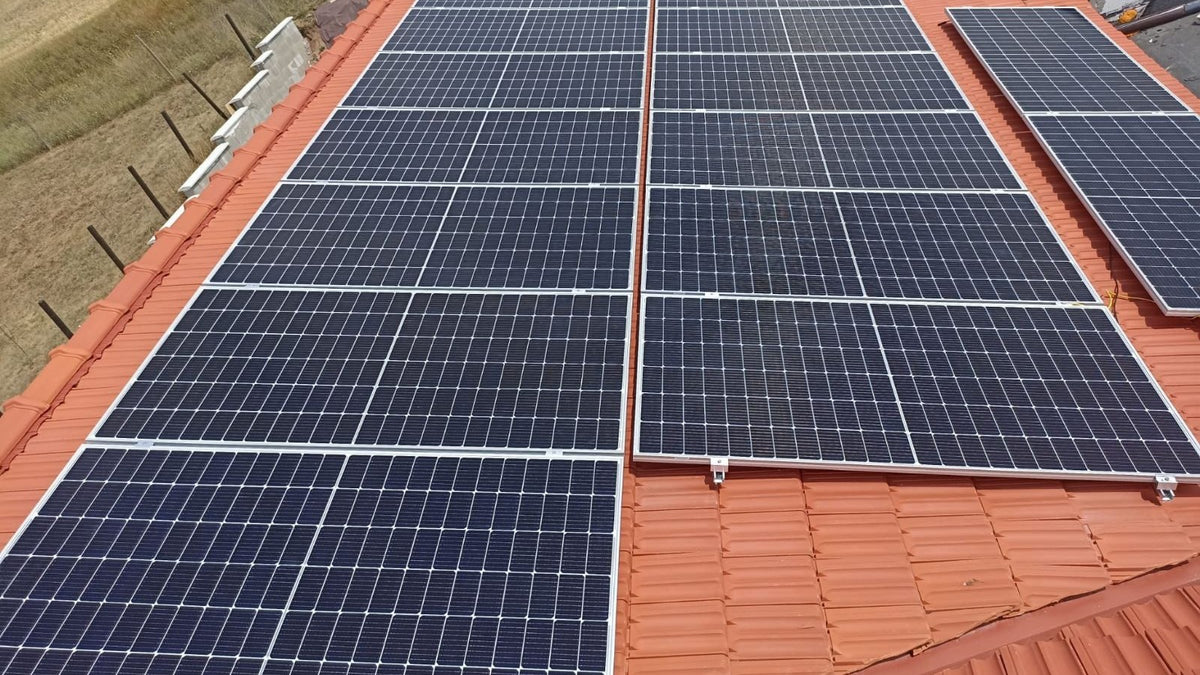
With or without storage, the system starts with panels suited to the roof. In the collection you will find the AIKO 650 W, with 24% efficiency, and the LONGi Hi-MO X10 480 W, with 23.5% efficiency. Besides total power, the choice takes into account module dimensions, layout, orientation and shading.
The LONGi 480 W, approximately 1.80 m long, is also suitable for flat roofs. For the AIKO 650 W, approximately 2.38 m, we choose other suitable locations; on flat roofs we use panels no longer than 2 m. The home assessment determines the configuration before the work is scheduled.
The standard installation in our packages includes the structure, DC cables, protection panel and documentation for the prosumer application. We use 6 mm² solar cable and original Stäubli MC4 connectors. The electrical work is carried out only by our own engineers, and installation is followed by testing and commissioning.
What helps us recommend the right option
- Your location and approximate consumption, for the first conversation.
- The hours when you use your major appliances.
- Your grid connection and the approved power from the ATR (grid connection technical approval) or the distribution contract.
- The available roof and any confirmed future consumption.
- Whether you want energy in the evening, and the list of circuits for backup.
We install the systems in this collection in Alba, Cluj, Sibiu, Hunedoara and Mureș. You can start from the configurations without batteries, and we will check how they fit your home and your plans.
Call 0723 172 359 or message us on WhatsApp. Together we will compare direct consumption, storage for the evening and the backup you need.

Leave a comment
This site is protected by hCaptcha and the hCaptcha Privacy Policy and Terms of Service apply.