
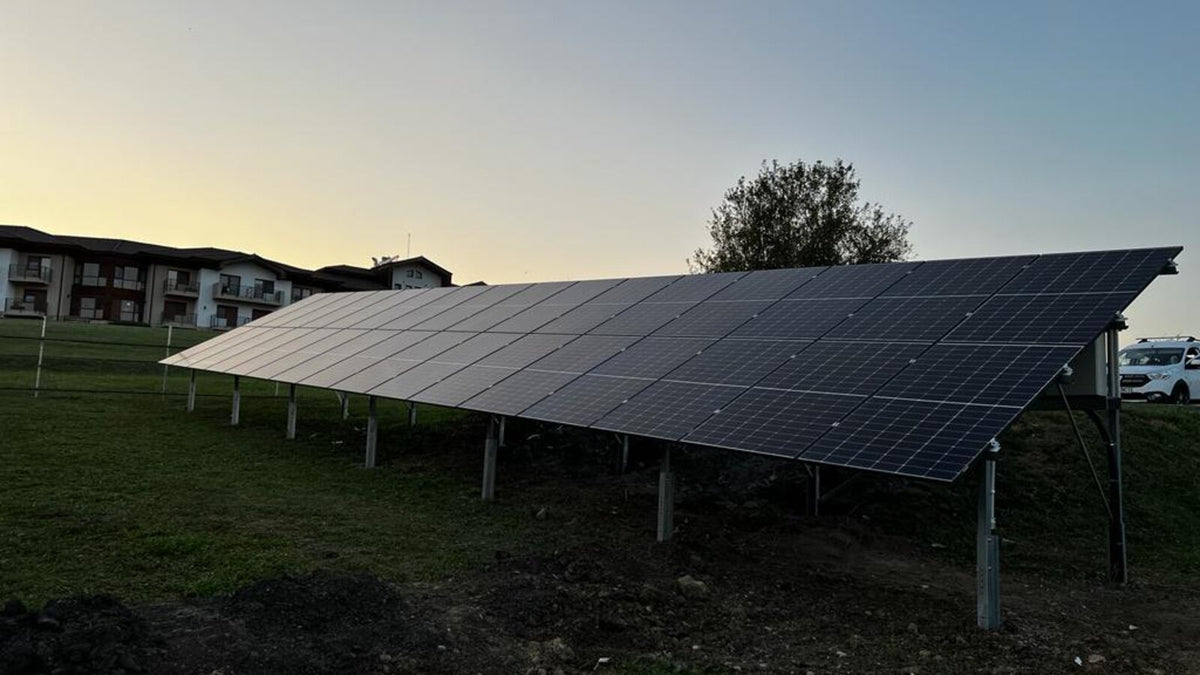
If you have land available next to your house, solar panels can be placed on a dedicated structure, with orientation and maintenance access chosen from the outset. At Nectaria Solar, for this kind of work we use galvanized steel structures made in an authorized factory and designed by the manufacturer. We install them without concrete, on driven or screw piles, using the solution that suits your ground.
For a family, the advantage is easy to understand: the PV array can be laid out in an accessible area, while the roof remains available for its usual uses. Success starts with choosing the location and with a foundation that works properly in the soil.
A factory-prepared residential solution
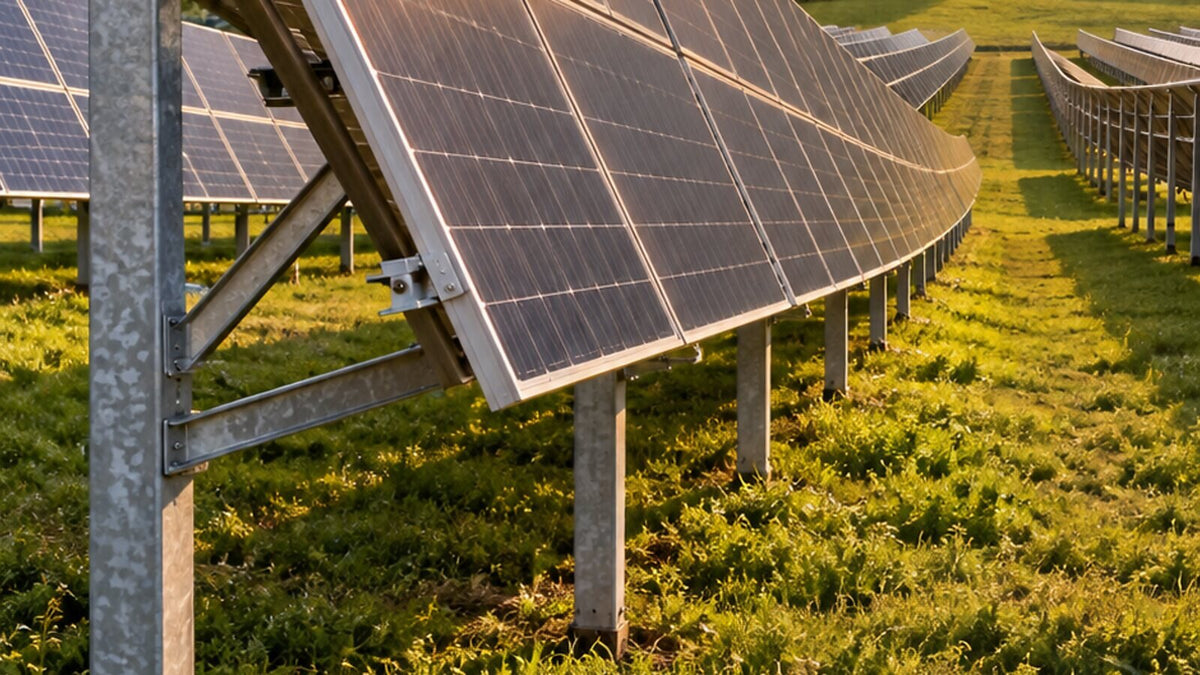
The structure is an assembly designed by the manufacturer, with elements that have defined positions and roles. The posts, cross beams, rails, bracing and joints must work together. This helps achieve a neat geometry and mount the panels on appropriate supports.
At Nectaria we use these structures manufactured for PV applications and organize the installation according to the chosen configuration. For you, what matters is that the solution delivered matches the number and dimensions of the modules, the local conditions and the method of anchoring in the ground. A structure can only be extended while maintaining compatibility and checking the new configuration.
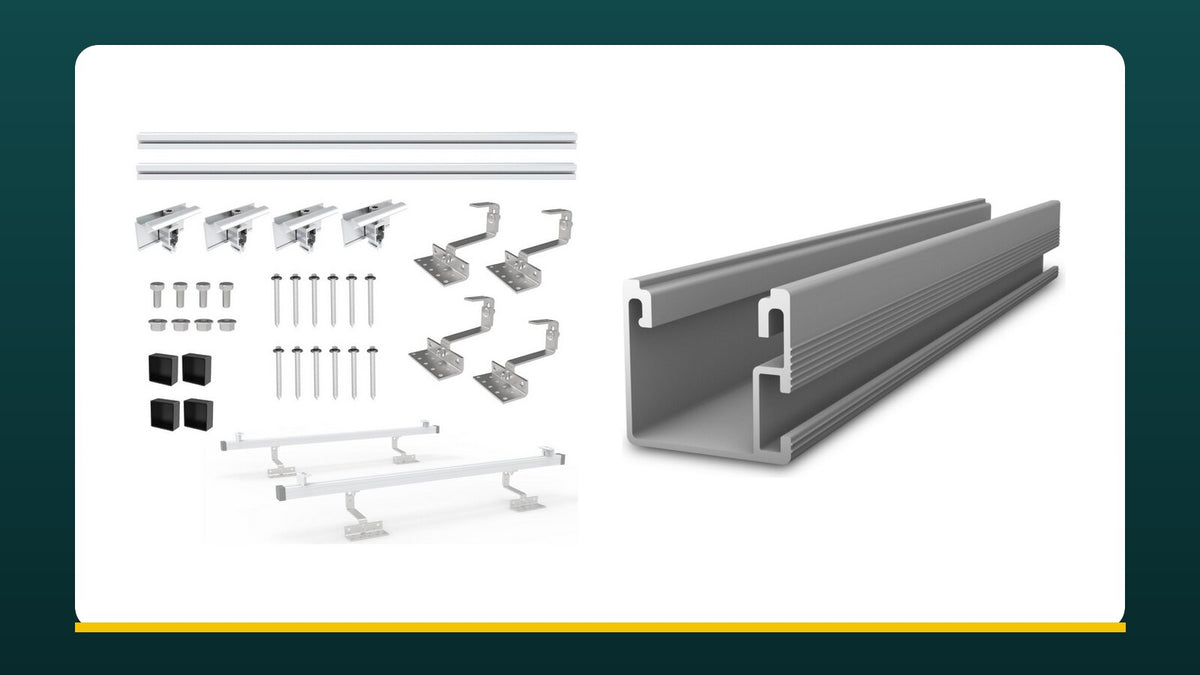
In our shop you will find the SOL PV structure kit and components dedicated to ground-mounted installation. The product page is a starting point for identifying the solution; the complete configuration is chosen for your project, including the foundation.
How panels are held in the ground without concrete
Driven piles are inserted into the ground mechanically. Screw piles are installed by rotation, using the appropriate equipment. Both options can transfer the loads from the structure to the soil without pouring concrete foundations, where the ground and the design allow that solution.
Screw piles are load-bearing foundations, as also described in the technical documentation for this type of product. Driven-pile systems are also presented in the documentation for fixed ground-mounted structures. The choice between the two starts from the soil and the loads on the structure.
Eliminating concrete work simplifies the organization of this stage. There is no pouring operation for pile foundations. The total duration of the job, however, depends on access, the ground and how the materials and machinery are prepared.
What we check in your garden
Before fixing the location, we look at shading from the house, outbuildings and vegetation. Both the current situation and how the space will be used in future matter. A spot that seems free can become inconvenient if it blocks access, mowing or a future landscaping project.
Next comes the ground: the slope, soil consistency, fill and any buried obstacles affect installation. Before the piles are inserted, the routes of utilities in the work area must be known. A garden that looks tidy on the surface can hide cables or pipes that change the position of the supports.
The resistance of the foundation in the ground is determined for the actual situation. The technical process for installing and testing piles includes a ground assessment and capacity tests. This approach makes it possible to choose a solution that withstands wind loads and the weight of the assembly.
Galvanized steel and details that matter over time
Galvanizing protects steel against corrosion. For parts exposed to the open air and those that go into the ground, the type of protection must be matched to the exposure conditions. Persistent moisture and the characteristics of the soil are part of the technical choice.
The thickness of the protective coating should be read together with the part specification and the manufacturing process. Documentation on galvanizing standards shows why requirements differ depending on the product. For the customer, the useful question is what protection the proposed structure has and for what conditions it was chosen.
At the level of the assembly, the bracing provides the stiffening specified in the design. In the catalogue you can see the SOL bracing, alongside the SOL rail. These components are selected according to their role and their compatibility with the system.
A PV array that is easy to live with
For a house, a good location must reconcile energy production with everyday life. We keep the access needed for inspections, cleaning and vegetation maintenance. The height above the ground is chosen taking into account the terrain and snow conditions, so that the lower edge of the modules stays in a suitable zone.
The dimensions of the panels influence the geometry of the table and the fixing positions. We use clamps suited to the frame and the mounting layout, including SOL mid clamps and SOL end clamps, in compatible configurations.
If you would like an overview of the general principles, you can also read our guide to ground-mounted PV structures. For a residential job, the discussion continues with your plot, access and your household's consumption.
For a ground-mounted structure that suits your house and your land, call Nectaria Solar on 0723 172 359.

Leave a comment
This site is protected by hCaptcha and the hCaptcha Privacy Policy and Terms of Service apply.